The Advantages of Utilizing Aluminum Factory for High-Quality Metal Casting Solutions
Aluminum foundries offer distinctive advantages for high-quality steel spreading options. Their lightweight residential properties add to structural stability while improving gas performance throughout different applications. In addition, light weight aluminum's phenomenal corrosion resistance guarantees toughness, reducing long-term upkeep expenses. This flexibility allows for intricate styles in multiple sectors. Aluminum Foundry. The benefits extend past these qualities, hinting at a more comprehensive effect on making procedures and sustainability. What other aspects make light weight aluminum a significantly popular selection in today's market?
Lightweight Residences of Aluminum Alloys
Aluminum alloys are renowned for their light-weight residential or commercial properties, making them a preferred selection in numerous markets, consisting of aerospace and vehicle. The thickness of light weight aluminum is around one-third that of steel, permitting significant weight reductions without jeopardizing architectural honesty. This characteristic makes it possible for producers to create parts that enhance gas efficiency and general performance in lorries and airplane.
Additionally, using light weight aluminum alloys adds to lower transportation expenses because of minimized weight, which is specifically useful in delivery and logistics. Designers and designers leverage these materials to create complicated forms and styles that would be unwise with much heavier steels. The capability to integrate lightweight attributes with stamina and longevity makes light weight aluminum alloys an excellent alternative for applications calling for extensive performance requirements. Generally, the lightweight nature of aluminum alloys positions them as an important product ahead of time innovation and improving sustainability throughout numerous fields.
Phenomenal Deterioration Resistance
When revealed to extreme atmospheres, products often catch destruction; nonetheless, light weight aluminum alloys display outstanding deterioration resistance that establishes them apart. This exceptional residential or commercial property stems from an all-natural oxide layer that bases on the surface area of light weight aluminum, offering a safety barrier against dampness, salt, and other harsh representatives. Unlike many steels, light weight aluminum does not corrosion, that makes it an excellent option for applications in aquatic, automobile, and building and construction markets.
Additionally, light weight aluminum alloys can be treated with various coatings and surfaces to enhance their rust resistance further. These therapies assure durability and resilience, lowering maintenance expenses with time. The ability to stand up to corrosive problems without significant degeneration permits producers to count on aluminum elements for extensive durations, ultimately causing higher operational effectiveness. The extraordinary deterioration resistance of aluminum alloys places them as a remarkable option for top quality metal spreading solutions in varied environments.
Superior Strength-to-Weight Ratio

Additionally, the strength-to-weight ratio of aluminum alloys is especially helpful in applications where weight financial savings is crucial. For circumstances, in aerospace design, lighter components add to enhanced gas effectiveness and efficiency. The mix of strength and minimized mass also promotes less complicated handling and setting up throughout making procedures. Aluminum foundries play an important role in producing premium spreadings that leverage these buildings, ensuring that markets can fulfill the demands of contemporary engineering difficulties properly.
Versatility in Applications
Aluminum foundries demonstrate remarkable flexibility across various markets, fitting a wide variety of applications. Their capability to personalize remedies assurances that certain requirements are satisfied, boosting performance and performance. This adaptability makes aluminum casting a recommended choice in fields such as automobile, aerospace, and consumer products.
Varied Sector Applications
Convenience defines the function of light weight aluminum foundries in different markets, showcasing their ability to adjust to a wide range of applications. These foundries serve sectors such as automotive, aerospace, and customer products, demonstrating their extensive capabilities. In the auto sector, light weight aluminum spreadings add to lightweight styles, improving gas effectiveness and efficiency. Aerospace applications take advantage of the strength-to-weight proportion of light weight aluminum, crucial for airplane components. In addition, customer products, consisting of electronics and appliances, utilize aluminum's resilience and aesthetic charm. The foundry's ability to produce detailed shapes and intricate styles satisfies the distinct needs of each industry, ensuring high-grade services. This versatility not only enhances production efficiency but additionally fosters development across diverse market fields, solidifying light weight aluminum's duty as a favored product.
Personalization for Specific Requirements
Tailoring light weight aluminum castings to satisfy details customer needs exhibits the versatility of foundries in attending to unique industry obstacles. Foundries can create personalized styles that deal with various specs, making certain ideal performance for diverse applications. This versatility permits the production of elements with unique forms, dimensions, and weights, enhancing their functionality in particular settings. Additionally, progressed spreading strategies make it possible for the incorporation of specialized alloys, which can enhance residential or commercial properties such as toughness, deterioration resistance, and thermal conductivity. By teaming up closely with clients, aluminum foundries can determine exact demands and provide tailored options that straighten with job objectives. This commitment to personalization not only promotes development however also positions aluminum spreadings as a preferred selection throughout several industries.
Enhanced Manufacturing Effectiveness
Boosted manufacturing efficiency in aluminum foundries is achieved with streamlined production processes that maximize process. By carrying out these processes, foundries can significantly reduce preparations, permitting for quicker turnaround on tasks. Furthermore, affordable manufacturing approaches additionally enhance overall efficiency, adding to enhanced competition in the market.
Streamlined Production Processes
Improving production processes is vital for achieving boosted production performance in light weight aluminum foundries. By maximizing workflows, aluminum foundries can reduce waste and reduce functional expenses. Automated systems play a pivotal function, enabling exact control over spreading specifications and making sure consistent top quality. Additionally, the combination of innovative technologies, such as computer-aided style (CAD) and simulation software program, helps with far better preparation and resource allowance. This not just speeds up the design-to-production cycle yet also boosts the ability to adapt to altering market demands. Employee training and advancement add to a much more skilled workforce, capable of operating advanced machinery. Eventually, these structured procedures bring about improved output, enabling aluminum foundries to satisfy consumer assumptions while keeping affordable rates.
Reduced Lead Times
Achieving decreased lead times is a direct advantage of executing streamlined production procedures in light weight aluminum foundries. By enhancing process and decreasing traffic jams, these foundries improve try this site production performance, enabling quicker turn-around on tasks. Automation modern technologies and specific organizing better add to this effectiveness, allowing makers to respond quickly to client demands. The capacity to produce high-quality spreadings in much shorter durations not pop over to this site just satisfies client expectations but additionally enhances competitive placing in the marketplace. In addition, minimized lead times facilitate much better stock monitoring, as businesses can readjust their supply chains with better dexterity. Essentially, aluminum foundries that focus on decreased preparations can use remarkable service while keeping the quality criteria necessary for costs metal spreading services.
Cost-efficient Manufacturing Methods
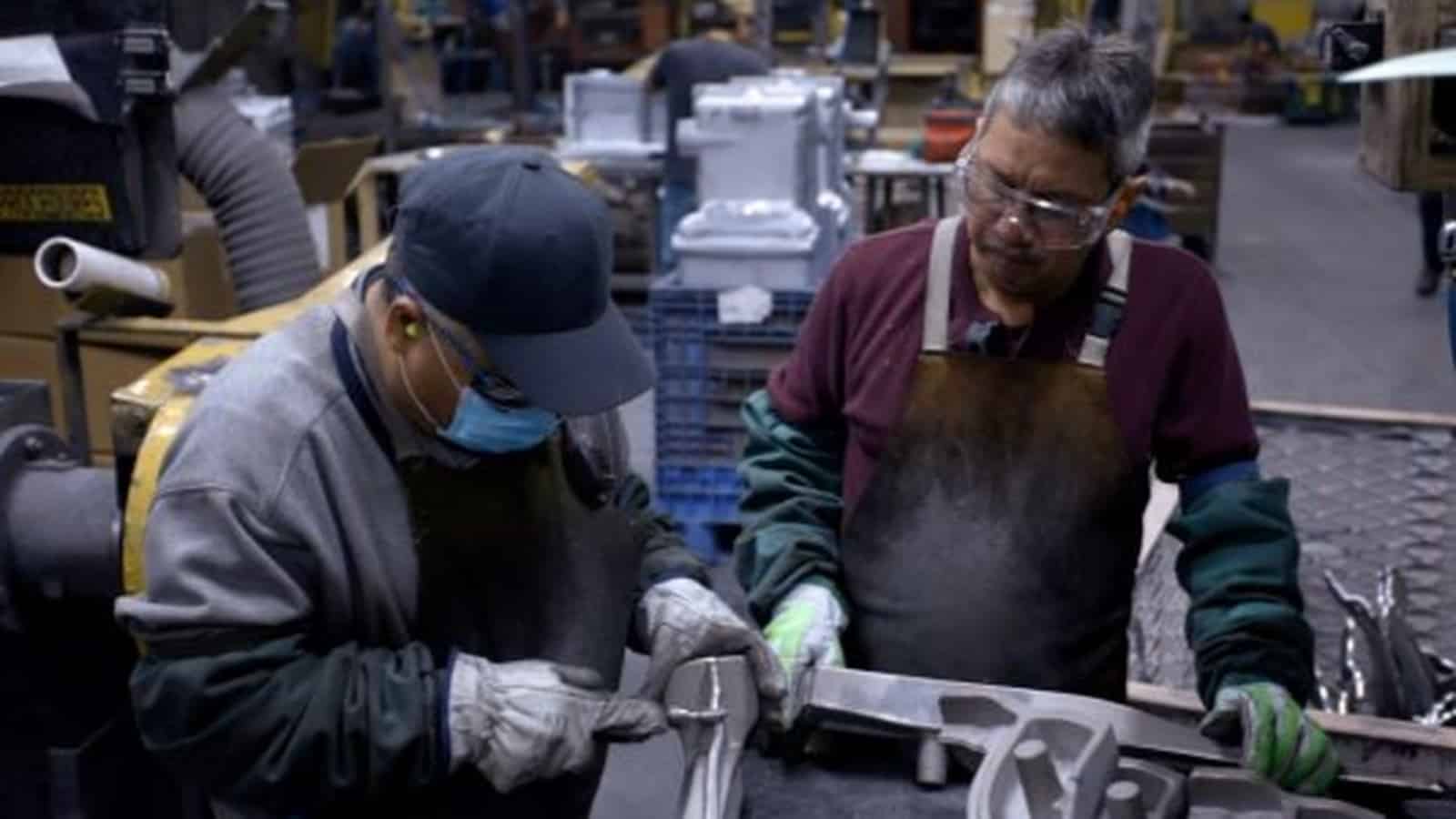
Economical Manufacturing Processes
Numerous light weight aluminum foundries are progressively taking on cost-efficient manufacturing procedures to improve productivity while reducing expenditures. These processes commonly incorporate advanced innovations such as automation and useful content accuracy casting, which improve operations and minimize labor prices. By utilizing computer-aided style (CAD) and computer system mathematical control (CNC) equipment, foundries can attain greater accuracy and lower product waste, resulting in a lot more reliable manufacturing cycles.
Furthermore, making use of lean production concepts allows foundries to maximize their operations, get rid of traffic jams, and improve general performance. This concentrate on constant enhancement not just decreases production prices but additionally enhances item quality.
In addition, calculated sourcing of raw products can even more add to cost savings, ensuring that foundries keep competitive prices without endangering on top quality. Generally, these cost-efficient production processes placement aluminum foundries to fulfill expanding market demands while keeping productivity and sustainability in the metal spreading market.
Eco-Friendly and Recyclable Material
Aluminum foundries are significantly identifying the relevance of eco-friendly and recyclable materials in their manufacturing processes. Aluminum itself is among one of the most recyclable metals, with the capacity to be recycled indefinitely without shedding its residential or commercial properties. This characteristic significantly reduces the environmental impact connected with metal casting, as recycled aluminum needs only a fraction of the energy required to generate new aluminum from bauxite ore.
Making use of recycled light weight aluminum not only decreases waste however also saves natural deposits and decreases greenhouse gas exhausts. As sectors change in the direction of lasting methods, light weight aluminum foundries are embracing much more eco-conscious methods, such as making use of energy-efficient modern technologies and lowering unsafe exhausts throughout manufacturing.
Regularly Asked Questions
What Kinds of Aluminum Alloys Are Frequently Utilized in Factory Processes?
Generally used aluminum alloys in foundry processes consist of A356, A380, and A413 (Aluminum Foundry). These alloys are favored for their superb castability, mechanical residential or commercial properties, and deterioration resistance, making them appropriate for different industrial applications and elements
Just How Does Aluminum Casting Contrast to Other Metal Casting Approaches?
Aluminum casting deals advantages such as lighter weight, excellent corrosion resistance, and good thermal conductivity contrasted to various other steel casting methods. In addition, it gives remarkable surface coating and accuracy, making it a recommended selection for many applications.
What Industries Advantage The Majority Of From Aluminum Factory Solutions?
Various industries, consisting of vehicle, aerospace, electronics, and building and construction, significantly take advantage of aluminum factory services. These fields utilize aluminum's light-weight, corrosion-resistant homes and versatility, guaranteeing high-performance elements and economical production services for varied applications.
How Does the Recycling Refine for Aluminum Job?
The recycling procedure for light weight aluminum entails accumulating scrap, shredding it, melting it down, and eliminating pollutants. This recycled light weight aluminum can after that be cast into new items, noticeably reducing power consumption and ecological effect contrasted to primary manufacturing.

What Are the Normal Lead Times for Aluminum Casting Projects?
Preparations for aluminum spreading jobs generally vary from a few weeks to several months, depending on elements such as job intricacy, mold and mildew preparation, and production quantity, which collectively influence the overall timeline for conclusion.
Comments on “10 key reasons to choose Aluminum Foundry for responsible manufacturing”